
Best Car Wash for Tesla & EVs in London (2024 Guide)
The best car wash for a Tesla or electric vehicle in London is a professional or professional mobile service that comes to your parking spot, combined with occasional professional hand washes for deeper cleans.
Avoid traditional automatic car washes with harsh brushes that can damage Tesla's cameras, sensors, and painted trim.
professional washes are ideal for London EV owners because they require no hose connection (perfect for residents' parking bays, underground car parks, and mews addresses), protect sensitive electronics around charging ports and Autopilot hardware, and remove London's hard water deposits without leaving new limescale.
For Tesla Model 3, Model Y, Model S, or any EV (Polestar, BMW iX, Mercedes EQC), prioritise pH-neutral products, microfibre contact only, and technicians trained to avoid high-pressure water near charge port doors, camera housings, and door seals.
Why EVs and Teslas Need Different Car Wash Approaches
Electric vehicles have fundamentally different washing requirements compared to petrol cars.
Tesla and other premium EVs feature multiple external cameras (eight on most Tesla models), ultrasonic sensors, radar units, and a charging port that—while weatherproof—shouldn't be subjected to direct high-pressure spray or flooding.
London adds three specific complications:
- Hard water: London's water averages 240-330 mg/L calcium carbonate. Spray-and-rinse washes leave limescale spotting on dark paintwork, especially visible on black or midnight silver Teslas.
- Traffic film and brake dust: Teslas using regenerative braking produce less brake dust than petrol cars, but London's congestion zone, ULEZ traffic, and construction dust still coat bodywork in a sticky film. EVs are often heavier (battery packs add 400-700 kg), so tyre and road grime accumulates faster.
- No driveway access: Most London EV owners charge on-street (lamp-post chargers, Source London points) or in underground car parks (Cadogan Place, One Hyde Park, Battersea Power Station residents' parking). You can't run a hose to a residents' bay on Sloane Street or a basement space in Canary Wharf.
Traditional petrol-station jet washes and tunnel car washes weren't designed with Tesla's camera arrays or charge port seals in mind. The best wash methods for London EVs are those that clean thoroughly while protecting the tech.
professional Mobile Car Wash: The Top Choice for London EV Owners
professional car washing uses advanced spray lubricants and ultra-soft microfibre towels to lift dirt without water. For Tesla and EV owners in London, this is the optimal solution:
Why professional works for EVs:
What to expect: A professional professional service will pre-spray the Tesla's panels with a high-lubricity solution, then wipe in straight lines using separate microfibre towels for bodywork, glass, wheels, and trim.
They'll hand-clean around door handles, camera lenses, charge port doors, and wing mirrors without applying pressure. The result is a swirl-free, streak-free finish.
Cost in London: professional mobile washes for a Tesla Model 3 or Model Y typically range £35-£60 depending on size and dirt level. Larger Model X or SUVs like the BMW iX may be £60-£80.
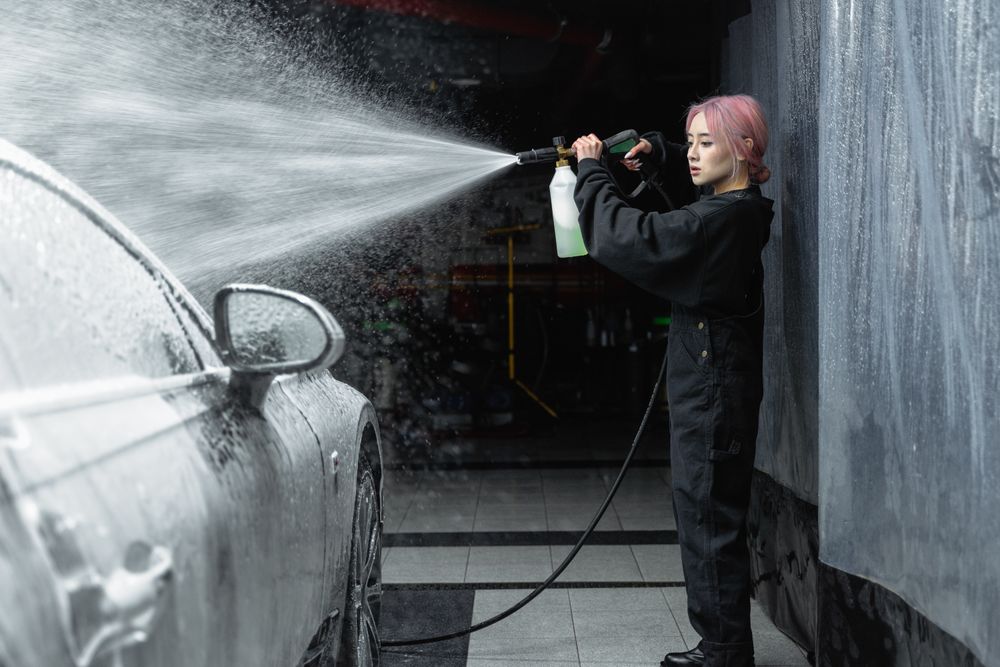
Hand Wash at a Trusted Detailer (Occasional Deep Clean)
For quarterly or bi-annual deep cleans, a professional hand-wash detailer with EV experience is the next best option. Look for:
- Two-bucket method: One bucket with pH-neutral shampoo, one with clean rinse water. Prevents dirt from being dragged back onto paint.
- Soft wash mitts: Not sponges or brushes. Microfibre or lambswool mitts reduce swirl marks.
- Low-pressure rinse: Garden hose pressure (40-60 psi), not a jet wash. Avoids forcing water into charge port seals or camera housings.
- Deionised final rinse: Removes London hard water minerals. Some detailers use a DI filter on the final rinse to prevent spotting.
- Separate wheel tools: Wheel-specific brushes and cleaners (non-acid formulas safe for Tesla's painted or diamond-cut alloys).
Where to find them in London: Established detailers in Battersea, Fulham, Mayfair, and Hampstead often service high-end EVs. Check Google reviews for mentions of Tesla, Polestar, or EV experience.
Expect £60-£120 for a full hand wash and dry.
When to choose hand wash over professional: If your Tesla hasn't been washed in over a month and has heavy grime (motorway tar, building site dust, bird droppings baked on by sun), a traditional hand wash with running water will remove it more thoroughly.
Follow up with a professional maintenance wash every 2-3 weeks.
What to Avoid: Automatic Tunnel Washes and Jet Washes
Automatic tunnel car washes (the kind at Tesco, Shell, or BP forecourts) are risky for Teslas:
- Spinning brushes: Even "soft cloth" brushes can scratch Tesla's painted surfaces, especially if the car ahead was a muddy Land Rover. The brushes don't differentiate between bodywork and camera lenses.
- High-pressure blasts: Top-mounted nozzles fire water at 1000-1500 psi. This can force water past weather seals into door frames, boot seals, or around the charge port door.
- Wheel scrubbers: Automated wheel brushes can catch on Tesla's aero wheel covers (Model 3/Y) or scratch diamond-cut alloy rims.
- Wax and sealant overspray: Tunnel washes spray carnauba wax or polymer sealant. This can coat camera lenses (front, rear, pillar cams), reducing Autopilot effectiveness until you manually clean the lenses.
Tesla's owner manual explicitly advises against automatic appointments with brushes or high-pressure water aimed at charge ports and cameras.
Jet washes (coin-operated pressure washers) are equally problematic:
If you must use a jet wash, keep the lance 30+ cm from bodywork, avoid the charge port and camera areas entirely, and use only the rinse setting (no soap or wax functions).
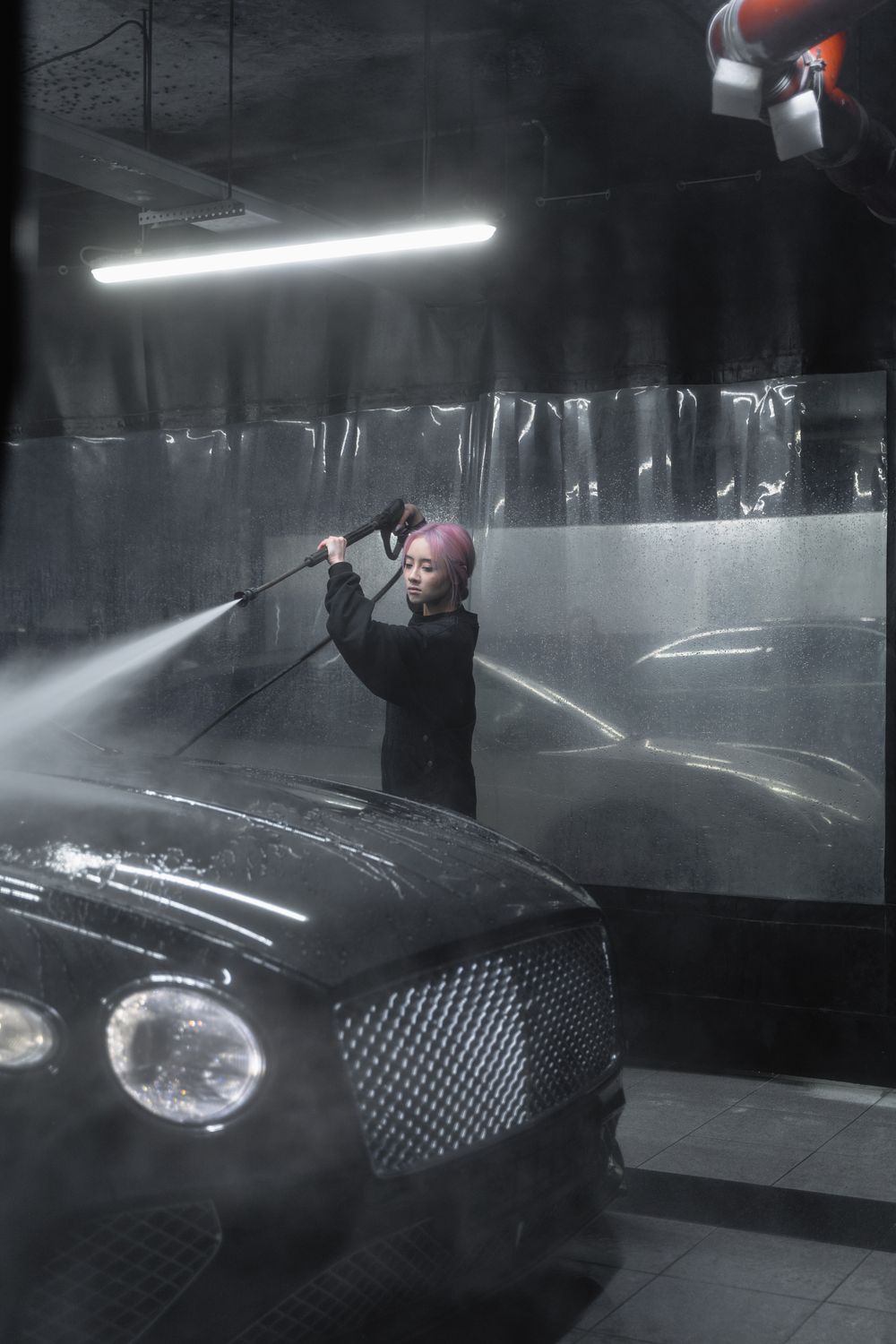
DIY Washing Your Tesla or EV in London (If You Have Access)
If you have a driveway or private mews parking (rare in central London but common in Richmond, Wimbledon, or outer boroughs), you can wash your Tesla yourself:
Equipment needed:
- Two buckets (10+ litres each) with grit guards.
- pH-neutral car shampoo (e.g. Autoglym Bodywork Shampoo Conditioner, Meguiar's Gold Class).
- Microfibre wash mitt (not a sponge).
- Separate wheel cleaner (non-acid formula safe for painted alloys).
- Soft-bristle wheel brush.
- Deionised water or quick detailer spray for final wipe (combats London hard water).
- Multiple microfibre drying towels (waffle-weave or plush).
Step-by-step process:
- Rinse the car with a garden hose (low pressure). Start from the roof, work down. Avoid spraying directly at the charge port door or camera lenses.
- Wash wheels first: Spray wheel cleaner, agitate with a soft brush, rinse. Wheels are the dirtiest part; clean them before bodywork to avoid cross-contamination.
- Two-bucket wash: Fill one bucket with shampoo solution (follow product dilution ratios), one with clean rinse water. Dip the mitt in shampoo, wash one panel (e.g. bonnet), rinse the mitt in the clean bucket, then reload with shampoo. Repeat for each panel.
- Rinse thoroughly: Hose off all shampoo, top to bottom. If using London tap water, expect some water spots unless you dry quickly.
- Dry immediately: Use a drying towel or microfibre drying blade. Pat, don't drag. If water has dried and left limescale spots, use a quick detailer spray to re-wet and buff.
- Clean cameras and glass: Use a separate microfibre cloth and glass cleaner (or quick detailer) to wipe camera lenses and windows. Tesla Autopilot requires clear front and pillar cameras.
London-specific notes:
- Check your borough's rules. Some councils prohibit car washing on public roads (even in residents' bays) to prevent soapy entering storm drains. Kensington & Chelsea, for example, has historically enforced this.
- If you live in a mews or communal courtyard, confirm with neighbours or the residents' association. Shared drainage systems may not be designed for car-wash .
- Use a hose nozzle with a shut-off trigger to minimise water use. London's hard water is a pain; the less you use, the fewer spots you'll get.
Protecting Your Tesla's Paint and Trim After Washing
Once your EV is clean, consider these protective steps (especially relevant in London's polluted, hard-water environment):
Ceramic coating or paint sealant: A professional ceramic coating (£300-£800 for a Tesla Model 3) bonds to the paint and makes future washes easier. Water and dirt slide off.
London traffic film and iron fallout (from brake dust) don't stick as aggressively. g.
polymer spray sealants) are a cheaper DIY alternative (£15-£30) and last 3-6 months.
Glass treatment: London rain leaves hard water spots on windows. g.
Rain-X, Gtechniq G1) to front and rear windscreens. Water beads and runs off, improving visibility and reducing wiper wear.
Wheel protection: Tesla's 18" or 19" alloy wheels (especially the grey Gemini or Überturbine styles) are prone to brake dust and road grime. Seal them with a wheel-specific sealant or ceramic coating.
Easier to clean next time.
Trim and rubber seals: Tesla's black door seals and trim can fade. Use a trim dressing or rubber conditioner (non-greasy formula) every few months.
This also helps door seals stay supple in London's damp winters.
Frequency: How Often Should You Wash Your EV in London?
Every 2-3 weeks is ideal for most London EV owners. More if:
- You park under trees (Hampstead, Regent's Park, Richmond Park areas): bird droppings, tree sap, and pollen coat cars weekly in spring and summer. Bird lime is acidic and etches paint if left.
- You drive frequently in the congestion zone or ULEZ: exhaust particulates and construction dust accumulate faster.
- Your Tesla is black, dark blue, or dark grey: shows dirt and water spots more visibly than silver or white.
Monthly minimum: Even if your car looks clean, London's air deposits a film of iron particles (from brakes and industry) and hard water residue. Quarterly deep cleans are insufficient for maintaining paint condition.
After winter: London's roads are treated with salt (rare, but used in cold snaps). Salt accelerates corrosion on wheel arches and undercarriage.
Wash your EV after any snow or heavy gritting.
Special Considerations for Tesla Autopilot and Camera Maintenance
Tesla's Autopilot, Full Self-Driving (FSD), and basic safety features (automatic emergency braking, lane keeping) rely on eight external cameras:
- Three front-facing (wide, main, narrow) in the windscreen trim.
- Two pillar cameras (B-pillar, left and right).
- Two side repeater cameras (in the door mirrors).
- One rear-facing (above the number plate).
Dirty cameras trigger on-screen warnings ("Camera blocked or blinded") and degrade Autopilot performance.
Washing camera areas:
- Use a soft, damp microfibre cloth. No paper towels (too abrasive on camera lenses).
- Never spray high-pressure water directly at camera housings. The lenses are recessed, but seals can be compromised.
- Clean cameras last (after bodywork) to avoid transferring grit onto the lenses.
- In London, traffic film and grime accumulate quickly on front cameras. Check and wipe them weekly, even if the car doesn't need a full wash.
Charge port care:
- The Tesla charge port is weatherproof but shouldn't be flooded. If washing by hand, avoid directing water flow into the charge port door.
- professional washes are safest: the door stays closed, and only the exterior painted surface is wiped.
- If water does enter the charge port area, open the door (tap the port on the car or in the app) and wipe dry with a cloth.
Frequently Asked Questions
**
A: Yes, professional appointments are ideal for underground car parks in Canary Wharf, Battersea Power Station, or developments like One Hyde Park. They produce no (just a few millilitres of dirty residue collected on towels), so there's no drainage or water spillage issue.
Many basement car parks in London prohibit residents from hosing cars due to drainage regulations and shared space rules, making professional the only practical option. A mobile professional service will clean your Tesla in your allocated bay without disturbing neighbours or violating building management policies.
**
A: London's hard water (240-330 mg/L calcium carbonate) leaves white mineral spots on dark paint if you don't dry immediately after rinsing. To remove existing spots, use a quick detailer spray or diluted white vinegar (50:50 with distilled water) on a microfibre cloth.
Spray the spotted area, let it sit for 30 seconds to dissolve the limescale, then buff dry.
For prevention, either dry your Tesla immediately after rinsing (before water evaporates), use a deionised water filter on your final rinse, or switch to professional washing, which uses deionised water in the formula and leaves no mineral deposits.
**
A: No, avoid automatic tunnel appointments (the brush-equipped type at petrol stations or supermarkets) for Polestar, BMW iX, Mercedes EQC, or any EV with external cameras and sensors.
The spinning brushes can scratch paint, damage camera lenses (which are critical for driver assistance systems), and apply high-pressure water to charge ports and door seals. London's automatic washes also use hard tap water with high mineral content, leaving limescale spots on dark EV paint.
Opt for hand washes or professional mobile services instead. If you must use an automatic wash, choose a touchless (no brushes) option and expect to spend time removing water spots afterwards.
**
A: Absolutely. professional visits are perfect for London's Uber and private hire drivers who need quick, frequent cleans without leaving their parking zone.
PHV drivers often park in residents' bays (Southwark, Hackney, Tower Hamlets) or outside their homes in areas with no driveway. A professional service takes 45-60 minutes and can be done while you're on a break, at home, or even outside a PCO inspection centre before a compliance check.
Many PHV drivers use professional washes weekly to maintain a professional appearance, especially if driving an EV like a Tesla Model 3 or Kia EV6 where cleanliness affects passenger ratings.
**


