This guide covers pet hair removal car for London drivers: what it involves, what it costs and how Valetly handles it.
To remove pet hair from car seats without a vacuum, use rubber gloves in a sweeping motion across the upholstery. The static friction pulls embedded hairs into clumps you can collect by hand.
Alternatively, spray fabric seats lightly with water and drag a window squeegee across the surface in short, overlapping strokes. The rubber edge lifts hair from fibres and rolls it into removable piles.
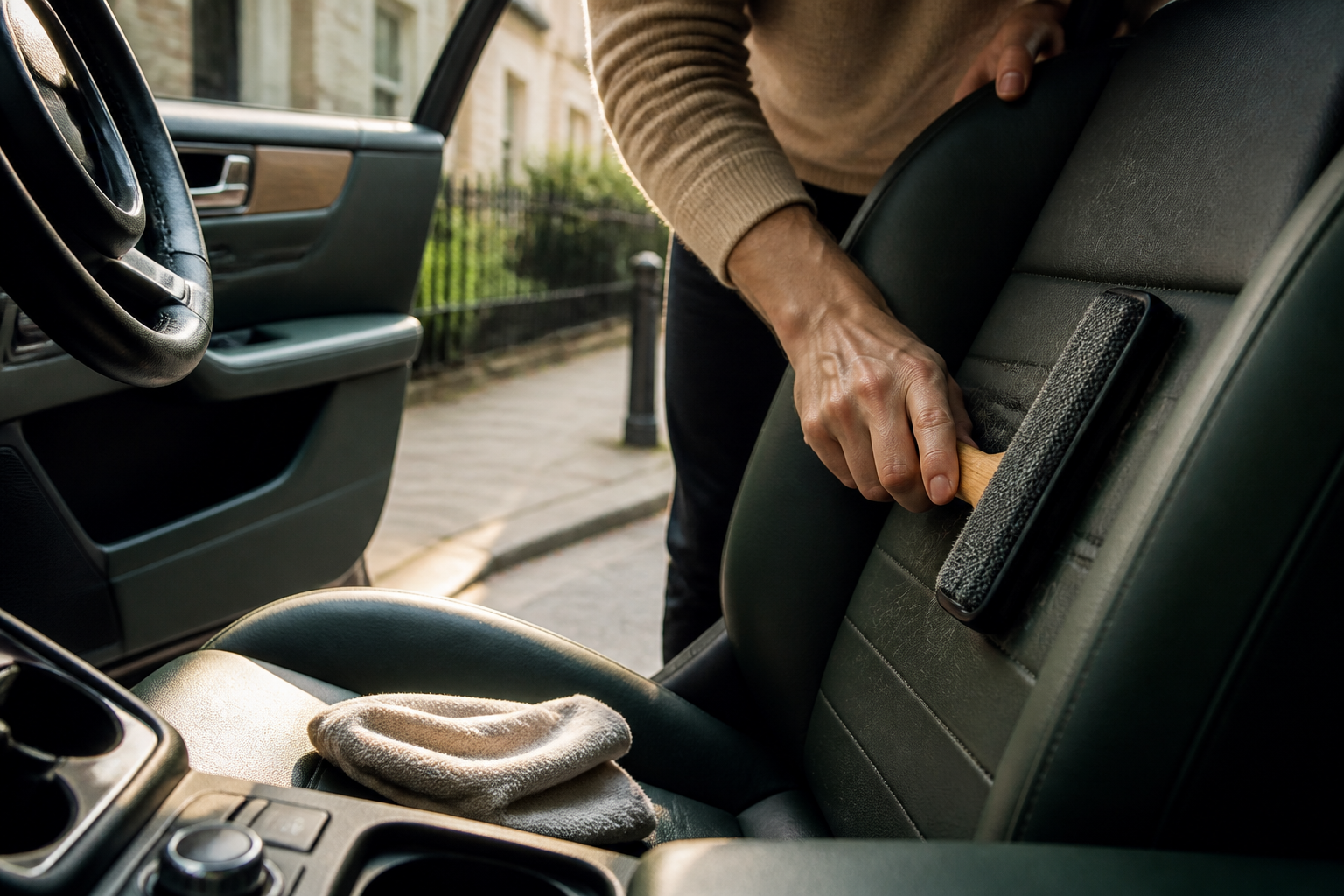
For leather seats, wipe with a damp microfibre cloth followed by a dry pass to collect loose fur.
A lint roller works well for final touch-ups on all seat types. These methods are particularly useful for London flat dwellers without garage access to a wet-dry vac or mains power in underground car parks.
Why pet hair clings to car upholstery
Dog and cat hair embeds itself deep into car seat fibres due to static electricity, natural oils, and the weave structure of most automotive fabrics. Short hairs from breeds like Labradors, French Bulldogs, and British Shorthairs penetrate velour and cloth seats more stubbornly than longer fur.
The friction from pets moving on seats during drives — common in London stop-start traffic through zones like Kensington or the City — pushes hair further into the material.
Leather and leatherette seats present different challenges. While hair doesn't embed as deeply, it collects in perforations, stitching grooves, and the gaps between seat and centre console.
Range Rover, BMW X5, and Tesla Model Y owners frequently report hair accumulation in these crevices after transporting pets to Hyde Park, Hampstead Heath, or Richmond Park.
Humidity affects removal difficulty. London's damp climate (average 70–80% humidity year-round) causes pet hair to clump and stick more aggressively than in drier environments.
Hair becomes slightly tacky when moist, creating additional adhesion to fabric surfaces.
The rubber glove method (most effective for fabric seats)
Standard household rubber gloves — washing-up gloves or latex disposables — generate friction that lifts pet hair through electrostatic attraction. This method works on cloth, velour, and fabric seats in most vehicles.
Step-by-step process:
-
Put on clean, dry rubber gloves on both hands
-
Starting at the top of the seat backrest, press your gloved hand firmly against the fabric
-
Drag your hand downward in slow, deliberate strokes (approximately 15–20 cm per stroke)
-
The hair will roll into visible clumps and balls
-
Collect the accumulated hair with your other gloved hand every 3–4 strokes
-
Repeat across the entire seat surface, working in sections
-
Pay special attention to seams, where hair concentrates
-
For stubborn areas, dampen the glove very slightly with water to increase grip
Why this works: The textured surface of rubber creates friction against both the fabric weave and the hair itself. As you stroke, static charge transfers from glove to hair, pulling it from the fibres.
The repetitive motion consolidates scattered individual hairs into manageable clumps.
London application: This method requires no equipment beyond kitchen gloves, making it ideal for residents in Mayfair, Chelsea, or Notting Hill mansion blocks where storing bulky cleaning equipment is impractical.
Works well in underground car parks at developments like One Hyde Park or Cadogan Square where mains power isn't readily available.
Time requirement: A typical five-seat saloon takes 12–18 minutes to treat all seating surfaces thoroughly.
Squeegee technique for deep-pile fabrics
A window squeegee — the type used for shower screens or car windscreens — provides mechanical action that pulls embedded hair from deeper pile fabrics like those in Volvo, Mercedes, or Volkswagen interiors.
Method:
-
Lightly mist the seat surface with plain water in a spray bottle (do not saturate)
-
Hold the squeegee at a 45-degree angle to the seat surface
-
Draw it across the fabric in overlapping 10–15 cm strokes
-
Hair will accumulate at the squeegee edge and roll into lines
-
After every 2–3 passes, collect the hair pile with your hand
-
Work systematically from top to bottom of each seat section
-
Allow fabric to air-dry (typically 20–40 minutes in London humidity)
Important considerations: Do not over-wet the seats. Excessive moisture can cause mould growth in London's damp climate, particularly in cars parked outdoors in areas like Battersea or Wandsworth where ventilation is limited.
The water merely acts as a light binder to make hair more cohesive; you're not washing the seat.
For perforated leather (common in BMW, Audi, and Range Rover models), skip the water entirely. Use the squeegee dry to avoid pushing moisture into the seat foam.
Lint roller and sticky tape alternatives
Lint rollers provide precision removal for final cleanup and hard-to-reach areas. Pet-specific lint rollers with stronger adhesive (brands like Scotch or generic versions from Tesco, Sainsbury's) outperform standard clothing rollers.
Effective approach:
-
Roll in one direction only (don't back-and-forth; this reduces adhesive effectiveness)
-
Apply moderate pressure — too light misses embedded hair, too heavy wastes adhesive sheets
-
Focus on headrests, door panel inserts, and the gap where seat back meets seat base
-
A standard 60-sheet roller covers approximately one and a half car seats before requiring replacement
DIY alternative: Wrap packaging tape (brown parcel tape or clear packing tape) around your hand, sticky-side out. Pat and lift against fabric surfaces.
Less efficient than purpose-made rollers but works in a pinch.
Replace the tape wrap every 2–3 minutes as it fills with hair.
Cost consideration: A multi-pack of lint roller refills from Wilko or Amazon costs £8–12 and handles 4–6 thorough car cleaning sessions — economical for regular pet transport.
Damp cloth technique for leather and leatherette
Leather, faux leather, and vinyl seats require different treatment than fabric. Hair sits on the surface rather than embedding, but static causes it to scatter when dry-wiped.
Process:
-
Dampen a microfibre cloth with plain water (wring out thoroughly — cloth should be barely moist)
-
Wipe across leather surface in straight lines
-
Hair will stick to the damp cloth and collect in streaks
-
Rinse the cloth every 30–40 cm² of coverage
-
Follow immediately with a dry microfibre cloth to remove any moisture and remaining loose hairs
-
For perforations, use a barely damp cotton bud to extract hair from holes without pushing it deeper
For premium leather in vehicles like Bentley, Jaguar, or Tesla Model S, consider distilled water to eliminate any mineral residue risk.
Balloon and fabric softener static methods
Two lesser-known approaches exploit static electricity in different ways:
Inflated balloon method:
-
Inflate a standard latex balloon to medium size (approximately 20 cm diameter)
-
Rub it briskly against your clothing or hair to generate static charge
-
Pass it slowly across seat surfaces
-
Hair will be attracted to the balloon and stick to its surface
-
Effective for light hair coverage; less so for heavily soiled seats
Fabric softener spray:
-
Mix one part liquid fabric softener with three parts water in a spray bottle
-
Lightly mist the seat (do not saturate)
-
Wipe with a microfibre cloth
-
The softener reduces static, allowing hair to release more easily
-
This method leaves a slight residue; follow with a barely-damp clean water wipe
Caution: Fabric softener can affect the breathability of technical fabrics in performance cars (Porsche, BMW M-series sport seats). Use sparingly or avoid entirely on these materials.
Brush and pumice stone techniques
Specialised brushes designed for pet hair removal provide mechanical agitation without requiring power:
Rubber bristle brush approach:
-
Pet hair removal brushes (available from Pets at Home, Amazon) feature soft rubber bristles
-
Brush firmly across fabric in one direction
-
Hair accumulates on the bristles; clean the brush every 20–30 strokes
-
Particularly effective on velour seats in older vehicles (pre-2010 Ford, Vauxhall models)
Pumice stone method (fabric only — never on leather):
-
Use a dedicated automotive pumice stone (not a bathroom pumice; you need one with finer texture)
-
Rub very gently across fabric seats in circular motions
-
Hair rolls up and can be collected
-
Test in an inconspicuous area first — aggressive use can damage delicate fabrics
-
Works well on robust commercial vehicle upholstery (common in PHV and Uber vehicles operating in London)
Preventive measures for regular pet transport
If you transport dogs or cats weekly or more (common for London owners visiting parks or travelling to vets in areas like Clapham, Dulwich, or Primrose Hill), prevention reduces hair accumulation:
Seat covers and protectors:
-
Quilted or waterproof seat covers provide a removable barrier
-
Machine-washable covers can be cleaned at home (preferable in London where laundrettes charge £8–12 per large item)
-
Hammock-style covers for rear seats prevent hair reaching seat backs and footwells
Regular light cleaning:
-
Quick rubber-glove pass after each pet journey (2–3 minutes) prevents hair from embedding deeply
-
Easier to remove fresh hair than week-old accumulation ground in by multiple journeys
Pet grooming before travel:
-
Brush your dog or cat before car trips
-
Reduces loose fur that sheds during the journey
-
Particularly important during spring shedding season (April–June in London)
Dealing with extreme hair accumulation
For vehicles with severe neglect or multiple large dogs (common in family estates or SUVs used for regular country trips from London):
Multi-method approach:
-
Start with rubber glove method to remove top 60–70% of hair (10–15 minutes)
-
Follow with squeegee technique on damp fabric for embedded remainders (8–10 minutes)
-
Finish with lint roller for final detail work (5 minutes)
-
Total time investment: 25–30 minutes for heavily soiled vehicle
When to consider professional help:
-
Hair embedded so deeply that home methods extract less than 50% after 30 minutes work
-
Perforated leather with hair pushed deep into holes
-
Allergic reactions to extended contact with pet dander (common issue for new car buyers purchasing used vehicles previously owned by pet households)
Tools to keep in your car (London-specific)
For London drivers who park on-street (80% of Hammersmith & Fulham residents, 65% in Westminster) and lack garage storage:
Minimal kit (fits in glovebox or door pocket):
-
One pair of rubber gloves
-
Travel-size lint roller (30-sheet mini version)
-
Two microfibre cloths (one for damp use, one for dry)
-
Small spray bottle with water (250ml)
Total cost: £8–12 from Poundland, Wilko, or supermarkets
Storage consideration: In summer heat (London reaches 25–32°C in July–August), rubber gloves can degrade if left in direct sunlight on the dashboard or parcel shelf. Store in the glovebox or under-seat storage.
EV owner considerations
Electric vehicle owners (Tesla Model 3/Y, Polestar 2, BMW i4 — increasingly common in central London boroughs with residential charging infrastructure) have additional factors:
Vegan leather (synthetic) seats:
-
Tesla and Polestar use polyurethane-based materials rather than animal leather
-
Hair sits on the surface but can stick to the slightly tacky texture
-
Damp cloth method works best; avoid harsh scrubbing which can mark the material
-
Follow Tesla's official guidance: use mild soap and water only, never solvent-based cleaners
Cabin air quality:
-
Many EVs feature HEPA cabin air filters (Tesla Bioweapon Defense Mode, for example)
-
Pet hair and dander can reduce filter efficiency
-
Regular hair removal from seats reduces the amount of airborne dander that reaches the filter
-
Filter replacement for EVs costs £40–80 at service (versus £15–25 for conventional cars)
Frequently asked questions
**Q: Can I remove pet hair from my car seats in an underground car park in Kensington without access to power or water?
A: Yes — rubber gloves and a lint roller require no utilities and work excellently in underground parking. Put on household rubber gloves and stroke firmly across fabric seats; hair will roll into clumps you collect by hand.
Follow with a lint roller for detail areas.
This method works perfectly in basement car parks at Cadogan Square, One Hyde Park, or any residents' parking where power points aren't available. Bring two pairs of gloves and a 60-sheet roller; a full five-seat clean takes 15–20 minutes.
The dry process also complies with parking management rules that typically prohibit wet cleaning in shared facilities.
**Q: Does London's hard water affect how I remove pet hair from leather seats?
A: London water (hardness 200–300 mg/L calcium carbonate across most postcodes) leaves limescale spots on leather if not dried immediately.
When using the damp cloth method for hair removal on leather seats, either use bottled water instead of tap water, or ensure you follow with a completely dry microfibre cloth within 30 seconds of wiping.
In areas with especially hard water like Croydon, Enfield, or parts of Barnet, dried tap water can leave white calcium deposits on black or navy leather.
The hair removal itself isn't affected, but water quality impacts finishing. 50 per litre from Tesco or Halfords) eliminates this concern entirely.
**Q: I'm an Uber driver in London — how quickly can I remove dog hair between passenger pickups?
A: For PHV drivers operating in London who've just transported a pet-owning passenger (Uber Pet bookings, for example), a rapid 3-minute treatment works for light to moderate hair: keep a pair of rubber gloves and a lint roller in your door pocket.
After drop-off, pull the gloves on and make 8–10 quick strokes across the rear seats where the dog sat. Collect the hair clumps and dispose.
Follow with three lint roller passes across the seat and backrest. This removes 70–80% of visible hair — sufficient before your next booking.
Do a thorough 15-minute clean (including squeegee method if needed) at the end of your shift.
This approach works well for drivers operating in zones with frequent pet-owner passengers like Hampstead, Richmond, or Battersea.
**Q: What's the best method for removing cat hair from cloth seats in a car parked on a Wandsworth street with no driveway?
A: The rubber glove method is ideal for street-parked vehicles with no facilities access. You need only gloves from home and 10 minutes time.
Open your car doors for ventilation (acceptable on most Wandsworth residential streets during daytime), put on rubber washing-up gloves, and systematically work across all fabric surfaces using firm downward strokes.
Cat hair — particularly from short-haired breeds like British Shorthairs common in London — responds excellently to this static-friction technique. Collect rolled-up hair clumps into a small bag as you work.
No water, power, or drainage required, so you won't violate street cleaning regulations or residents' parking scheme rules.
The entire process is silent and clean, avoiding complaints from neighbours in terraced housing areas typical of Wandsworth, Tooting, or Earlsfield.
**Q: Will removing pet hair from seats myself affect my Range Rover's warranty or resale value in London's premium car market?
A: Non-invasive methods like rubber gloves, lint rollers, squeegees, and damp microfibre cloths do not affect manufacturer warranties or diminish resale value — they're routine maintenance, not modification.
Range Rover, BMW, Mercedes, and other premium brands sold in London specifically expect owners to perform basic interior care between services. What damages value is neglect: allowing pet hair to accumulate causes odours, staining (from oils in fur), and premature wear to perforated leather.
These reduce resale values by £800–1,500 in London's competitive premium used car market (particularly for vehicles sold through specialists in areas like Park Royal or near Battersea).
Regular hair removal using the methods described actually protects your investment. Document your cleaning schedule if you're leasing; fleet managers appreciate maintained interiors and may waive wear-and-tear charges at lease end.
Prefer to hand it over? Book car seat cleaning in London and a vetted valet comes to your address, from £75.