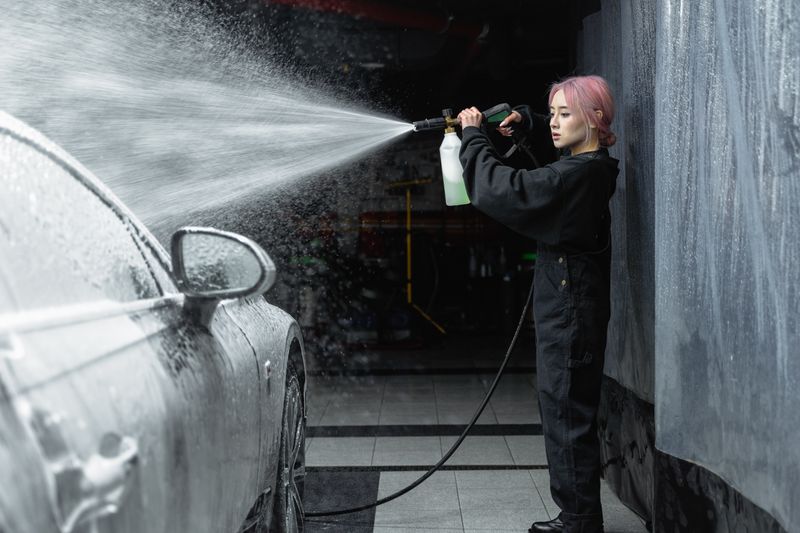
This guide covers why car dirty after wash london for London drivers: what it involves, what it costs and how Valetly handles it.
Your car looks filthy two days after a wash because London combines uniquely aggressive contaminants: heavy brake dust from stop-start traffic, hard water rich in calcium and magnesium that leaves white spots, diesel particulates and traffic film that cling to paintwork, and unpredictable rain that turns airborne grime into streaky residue.
Stop-start driving in the congestion zone, ULEZ zone, and around Chelsea, Canary Wharf, and Kensington generates more brake dust per mile than motorway driving.
London's water supply—especially in postcodes like SW1, W1, and EC1—contains 200–300 mg/L of calcium carbonate, double the national average, so every rain shower or improper rinse leaves mineral deposits.
Traffic film—a mix of diesel exhaust, tyre rubber, and road oils—bonds to paint within hours, and spring pollen or winter road salt accelerate the cycle. Even if you park underground at Cadogan Place or One Hyde Park, your car picks up contamination the moment you drive out.
The result: a perpetually grimy vehicle that never looks freshly washed.
London's unique dirt cocktail: what's landing on your car
London's air quality and driving conditions create a perfect storm for rapid vehicle soiling. Understanding the specific contaminants explains why your car looks tired so quickly.
Brake dust is the dominant culprit. Stop-start traffic in Zone 1, around Hyde Park Corner, Marble Arch, and Old Street roundabout means you're braking constantly.
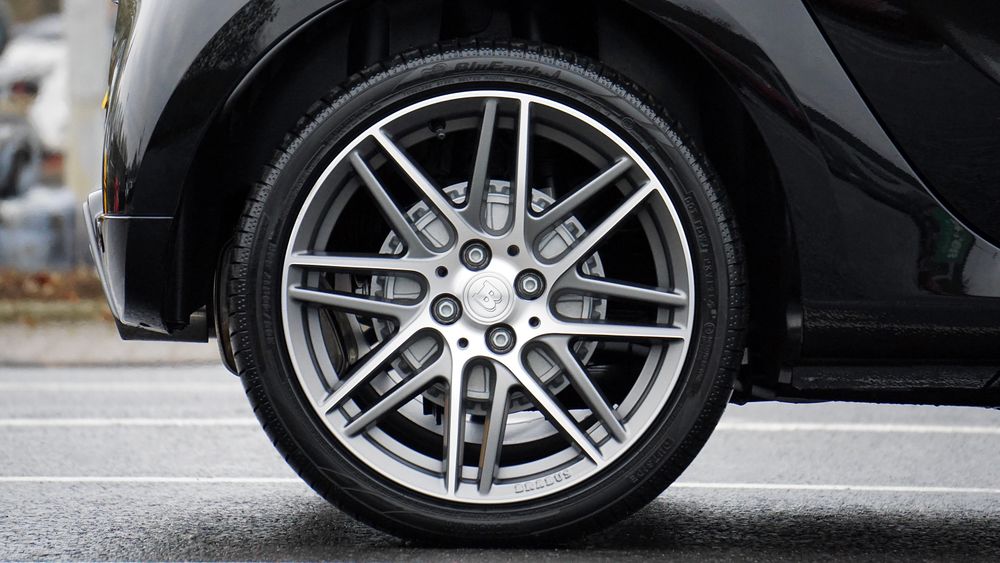
Every brake application sheds microscopic iron particles from brake pads and rotors. These particles are magnetic, hot when deposited, and bond aggressively to alloy wheels and lower panels.
Black or grey dust coats wheels within 24 hours. If you drive a heavier EV—Tesla Model 3, Polestar 2, BMW iX—regenerative braking helps, but friction brakes still engage during hard stops, and the extra kerb weight means more dust per stop.
Hard water spots are chemically etched marks, not dirt you can wipe away. London water contains 200–300 mg/L of dissolved calcium and magnesium.
When rain dries on your bonnet or boot, it leaves behind white mineral rings. If you wash your car with a hose and let it air-dry, you're effectively painting your car with limescale.
These spots resist standard car shampoo and require acidic or chelating agents to remove. Areas like Hampstead, Belgravia, and Battersea see this problem acutely because residents often lack covered parking.
Traffic film is an oily, black residue composed of diesel particulates, tyre wear particles, and road oils. London's bus fleet, black cabs, and delivery vans run on diesel, which emits fine soot particles.
These particles mix with microscopic rubber from tyres and engine oil mist, creating a sticky film that adheres to vertical surfaces—doors, bumpers, glass. Traffic film is hydrophobic, meaning it repels water, so rain doesn't wash it away; instead, rain slides over it, carrying more dirt with it.
This film builds up fastest on white, silver, and light-blue cars because the contrast is visible.
Pollen and organic matter peak in spring (April–June) and autumn. London plane trees, common in streets around Notting Hill, Marylebone, and Greenwich, shed sticky pollen that bonds to paintwork.
This yellow-green dust is hygroscopic—it absorbs moisture—so it forms a paste that stains clear coat if left for days. Bird droppings are acidic (pH 3–4) and etch paint within 48 hours if not removed.
Parking under trees in Regent's Park, Richmond, or along leafy streets in Dulwich guarantees organic contamination.
Road salt and grit in winter (November–March) accelerate corrosion and leave white streaks on paint and glass. Councils spread rock salt on A-roads and residential streets during freeze warnings.
Salt is hygroscopic and attracts moisture, so your car stays perpetually damp, promoting rust on sills, wheel arches, and undercarriage. Even if you wash salt off, it re-deposits from road spray within hours.
Why traditional washing makes the problem worse
Many Londoners unintentionally make their car dirtier by using methods that leave residue or fail to address contaminants.
Using tap water without drying is the single biggest mistake. If you wash your car with a hose in a mews or residents' bay in Kensington, Chelsea, or Wandsworth, and let it air-dry, you're depositing limescale.
The water evaporates, but minerals remain. Over weeks, this builds a hazy film that dulls paint and glass.
Professional detailers use deionised or reverse-osmosis water to avoid this, but home users rarely have access.
Cheap or alkaline car shampoos strip wax and leave surfactant residue. Products like washing-up liquid (pH 9–10) remove grease but also strip protective layers, leaving paint vulnerable.
Once wax is gone, dirt bonds directly to clear coat, and your car looks filthy faster. pH-neutral car shampoos (pH 6–8) clean without stripping, but many car washes—especially hand-wash sites in Zone 2 and 3—use harsh, low-cost detergents to speed throughput.
Washing in direct sunlight causes water and shampoo to dry before rinsing, leaving soap spots and streaks. On a sunny day in Battersea Park or Clapham Common, water evaporates in seconds, trapping dirt and soap on panels.
This is why cars washed outdoors often look worse after drying.
Skipping wheel and arch cleaning means brake dust and road grime remain, bleeding back onto bodywork during rain. If you wash the body but ignore wheels, the first puddle re-contaminates doors and sills.
Not drying properly or using dirty towels deposits lint, scratches, and residual dirt. Microfibre drying towels must be clean and damp; if used dry or contaminated, they scratch clear coat and leave lint.
How London driving conditions accelerate dirt buildup
Your driving environment determines how fast your car gets dirty. London's density, weather, and infrastructure all contribute.
Stop-start traffic in the congestion zone (weekdays 7am–6pm) and around major junctions—Oxford Circus, Piccadilly Circus, Elephant & Castle—means you're braking every 10–20 seconds. Each stop generates brake dust, and each acceleration stirs up road grime from the vehicle ahead.
Motorway driving at constant speed generates far less brake dust and exposes your car to less turbulent, cleaner air.
Underground car parks with poor ventilation trap diesel fumes and concrete dust. Multi-storey car parks in Canary Wharf, Westfield Stratford, and under luxury blocks like One Hyde Park accumulate airborne particulates that settle on parked cars.
Concrete dust from walls and ceilings coats bonnets and roofs, especially in older facilities.
Street parking exposes your car to everything: road spray, bird droppings, tree sap, and human interference. Residents' bays in Islington, Lambeth, and Southwark leave cars unprotected for days or weeks at a time.
Rain, wind, and passing traffic continually deposit grime.
London rain is not clean water. Raindrops form around airborne particulates—soot, pollen, dust—so they're already dirty when they hit your car.
Light drizzle is worse than heavy rain: it doesn't rinse anything away, it just spreads grime into streaks. Heavy rain can rinse some dirt, but it also splashes road spray onto doors and sills.
London sees 106 rainy days per year on average, so your car is perpetually wet or drying, which accelerates contamination.
No driveway or hose access means many Londoners can't wash their car at home. Flats in Mayfair, Shoreditch, and King's Cross lack outdoor taps or drainage, so residents rely on forecourt washes or do nothing.
Without regular maintenance, dirt accumulates exponentially—each layer makes the next layer stick faster.
How to keep your car cleaner for longer in London
You can't eliminate dirt, but you can slow its accumulation and make each wash last longer.
Apply a durable sealant or ceramic coating. Wax lasts 4–6 weeks; synthetic sealants last 3–6 months; ceramic coatings last 1–3 years.
These products create a hydrophobic (water-repelling) layer that prevents dirt from bonding. Water beads and rolls off, carrying loose dirt with it.
Brake dust and traffic film sit on top of the coating rather than etching into paint, so they rinse away more easily. A single ceramic coating application costs £300–£800 depending on the vehicle, but it reduces wash frequency and effort significantly.
Wash more frequently, but gently. Washing every 7–10 days prevents dirt from bonding and hardening.
Use a pH-neutral car shampoo, two-bucket method (one for shampoo, one for rinsing the wash mitt), and microfibre wash mitts. Rinse thoroughly and dry with a clean microfibre drying towel or forced air.
If you lack a hose, professional wash products (spray-on solutions with lubricants and surfactants) can remove light dirt safely. Valetly's professional system is designed for London flats and underground parking—no hose, no , no residents' complaints.
Use a spray sealant or quick detailer after every wash. These products top up protection and add gloss.
Spray onto clean, dry panels, spread with a microfibre cloth, and buff. This 5-minute step significantly extends time between washes.
Clean wheels and arches separately. Use a dedicated wheel cleaner (non-acid for alloy wheels) and a wheel brush to remove brake dust before washing the body.
If brake dust remains on wheels, it splashes onto clean bodywork during driving.
Dry your car properly. Use a large, plush microfibre drying towel or a forced-air blower (like a car dryer or leaf blower on cool setting).
Drying prevents water spots and removes residual dirt that would otherwise dry onto paint.
Park strategically. If possible, park in covered or underground spaces away from trees and bird perches.
If street parking is your only option, avoid parking under plane trees or near bus stops (diesel soot). Use a car cover if you're leaving the car parked for more than a week, though this is impractical for daily drivers.
Invest in a pre-wash or snow foam. These products loosen dirt before you touch the paint, reducing the risk of scratching during the wash.
Spray on, let dwell for 3–5 minutes, rinse off. This removes 60–70% of surface dirt without contact.
Address contaminants immediately. Bird droppings, tree sap, and dead insects are acidic or sticky.
If left for days, they etch or stain clear coat. Carry a bottle of quick detailer or professional wash in your boot and wipe off fresh contaminants as soon as you notice them.

Why professional and mobile car care suits London
London's infrastructure challenges make traditional washing difficult. professional car washing solves most of these problems.
Convenience for busy professionals and Uber drivers. You don't need to drive to a forecourt, queue, or spend your Saturday morning washing.
A mobile washer comes to your office car park in Canary Wharf, your residential mews in Notting Hill, or your Uber parking spot in Stratford. The car is washed while you work, sleep, or relax.
Preserves existing protection. professional wash products are pH-neutral and contain gloss enhancers, so they don't strip wax or sealant.
Each wash adds a thin layer of lubrication, which helps repel future dirt.
Suitable for light to moderate dirt. professional washing works best for weekly or fortnightly maintenance.
If your car is caked in mud from off-roading, a pre-rinse is necessary. But for typical London dirt—brake dust, traffic film, pollen, light road spray—professional washing is safe and effective.
The science of why dirt sticks faster after washing
Ironically, washing your car can make it attract dirt faster if done incorrectly.
Residual surfactants from cheap shampoos are sticky. Surfactants reduce water's surface tension to lift dirt, but if not rinsed completely, they remain on the paint as a tacky film.
This film attracts airborne dust, pollen, and diesel soot like a magnet. This is why forecourt washes often leave cars feeling slightly sticky.
Stripped wax or sealant leaves bare clear coat exposed. Clear coat is porous at the microscopic level, so dirt bonds directly into these pores.
A protected surface (waxed or sealed) has a smooth, slippery layer that dirt can't grip.
Static electricity from certain drying methods attracts dust. Rubbing a dry microfibre cloth on paint generates static, which pulls dust and lint from the air.
Using a damp (not wet) drying towel or forced air eliminates static.
Hydrophilic surfaces (water-loving) hold onto water droplets, which evaporate and leave mineral spots. Hydrophobic surfaces (water-repelling) cause water to bead and roll off, carrying loose dirt with it.
Ceramic coatings and synthetic sealants are highly hydrophobic; bare paint and old wax are less so.
Long-term strategies for London car owners
If you plan to keep your car for years, invest in protection and systems.
Ceramic coating is the single best investment for London drivers. It costs £300–£800 depending on the vehicle and installer, lasts 2–3 years, and reduces wash frequency by 50%.
Traffic film and brake dust don't bond to the coating, so they rinse away easily. Hard water spots still form but come off with a quick detailer, not aggressive polishing.
Paint protection film (PPF) on high-impact areas—front bumper, bonnet leading edge, wing mirrors, door edges—prevents stone chips and scratches. London's tight parking (mews, narrow streets in Belgravia and Marylebone) means door dings and scuffs are common.
PPF absorbs impacts and heals minor scratches with heat.
Regular professional detailing (every 3–6 months) removes embedded contaminants that washing misses. Clay bar treatment removes bonded traffic film, iron fallout remover dissolves brake dust, and polishing restores gloss.
This prevents long-term damage and keeps protection layers effective.
Use a garage or covered parking if available. Underground car parks at Battersea Power Station, King's Cross, and Paddington Basin protect cars from rain, pollen, and bird droppings.
If you have access to a garage in Hampstead or Richmond, use it.
Track wash frequency and costs. Many London drivers overspend on cheap forecourt washes (£6–£12) that don't last.
Washing twice a week at £8 each costs £832 per year and still leaves your car looking average. A monthly professional mobile wash (£40–£60) plus a ceramic coating (amortised over 3 years) costs less and delivers far better results.
Frequently asked questions
Why does my car in Chelsea always have white spots after it rains?
Chelsea, like most of inner London (SW1, SW3, W1, W8), has very hard water—200–300 mg/L of dissolved calcium and magnesium. When rain dries on your car, it leaves behind mineral deposits (limescale) that appear as white rings or hazy spots.
These spots are chemically bonded to your clear coat, so they don't rinse away with more water.
To remove them, use a water spot remover (contains weak acids or chelating agents) or a vinegar solution (50:50 distilled white vinegar and deionised water), spray onto the affected area, let dwell for 2–3 minutes, then wipe with a microfibre cloth.
To prevent future spots, dry your car immediately after rain or washing, or apply a hydrophobic sealant or ceramic coating that causes water to bead and roll off before evaporating.
Is it legal to wash my car on the street in Kensington or Wandsworth residents' bays?
Why does my black Tesla in Canary Wharf look dusty within 24 hours of washing?
Black paint shows every speck of dust, and Canary Wharf has several aggravating factors. First, the area has heavy stop-start traffic (Bank, Limehouse, Blackwall Tunnel approaches) generating huge amounts of brake dust.
Even though your Tesla uses regenerative braking, the friction brakes still engage during hard stops, and the car's extra kerb weight (1,800–2,100 kg) means more dust per stop.
Second, the underground car parks in Canary Wharf (especially older multi-storeys) have poor ventilation, trapping diesel fumes from taxis and delivery vans, plus concrete dust from walls and ceilings. These airborne particulates settle on your car overnight.
Third, black paint is hydrophilic (attracts water), so moisture from the air causes dust to stick. To keep your Tesla cleaner longer, apply a ceramic coating or synthetic sealant to create a hydrophobic (water-repelling) layer.
Dust and brake dust will sit on top of the coating rather than bonding to paint, so they rinse or wipe away easily. Wash weekly with a pH-neutral professional wash or quick detailer to remove dust before it accumulates.
Does London traffic film damage my car's paint, or is it just cosmetic?
London traffic film—composed of diesel particulates, tyre wear particles, and road oils—is both cosmetic and mildly damaging over time. Cosmetically, it makes your car look dull, grey, and grimy, especially on white, silver, and light-coloured paint.
Structurally, traffic film is acidic (pH 4–6) and contains heavy metals (iron, zinc, cadmium from brake dust and diesel soot). If left on paint for weeks or months, these contaminants oxidise and etch into clear coat, causing permanent staining or haze that requires machine polishing to remove.
Traffic film is also hydrophobic, meaning it repels water, so rain doesn't wash it away—it just spreads it into streaks. On glass, traffic film creates a greasy smear that reduces visibility and causes glare at night.
To prevent damage, wash your car every 7–14 days using a pH-neutral car shampoo or professional wash, and apply a sealant or ceramic coating to create a barrier. Iron fallout remover (a purple liquid that turns red when it dissolves iron particles) can remove embedded traffic film and brake dust without polishing.
I'm an Uber driver in London—how can I keep my car cleaner without losing hours every week?
Uber and PHV drivers in London face extreme dirt accumulation due to high daily mileage, stop-start traffic around King's Cross, Paddington, Heathrow, and Stratford, and constant exposure to road spray and brake dust.
Washing at a forecourt twice a week (common for PHV drivers) costs £800–£1,000 per year and takes 2–3 hours total per week. A better system: 1) Apply a ceramic coating (£300–£500 for a saloon), which lasts 2–3 years and reduces wash frequency by 50%.
-
Use a mobile professional car wash service like Valetly once per week—book it to come to your home or regular parking spot in Croydon, Ilford, or Hounslow while you sleep or rest between shifts. This costs £160–£240 per month but saves you 8–12 hours per month.
-
Keep a bottle of quick detailer and microfibre cloths in your boot. Wipe down door handles, mirrors, and windows between washes to keep the car presentable for passengers.
-
Vacuum the interior twice per week (5 minutes) to prevent dirt and debris from building up in footwells and seats. This system keeps your car consistently clean, maximises your earning time, and impresses passengers, which improves ratings and tips.