This guide covers ceramic coating vs wax for London drivers: what it involves, what it costs and how Valetly handles it.
The debate between ceramic coating and traditional wax has intensified as ceramic technology becomes more accessible and wax formulations improve. In 2026, car owners face more choices than ever—from budget carnauba waxes to professional-grade ceramic coatings costing hundreds of pounds.
This guide cuts through the marketing claims to help you decide which paint protection genuinely suits your car, budget and lifestyle in London.
Understanding the basics: what are ceramic coatings and waxes?
Traditional car wax
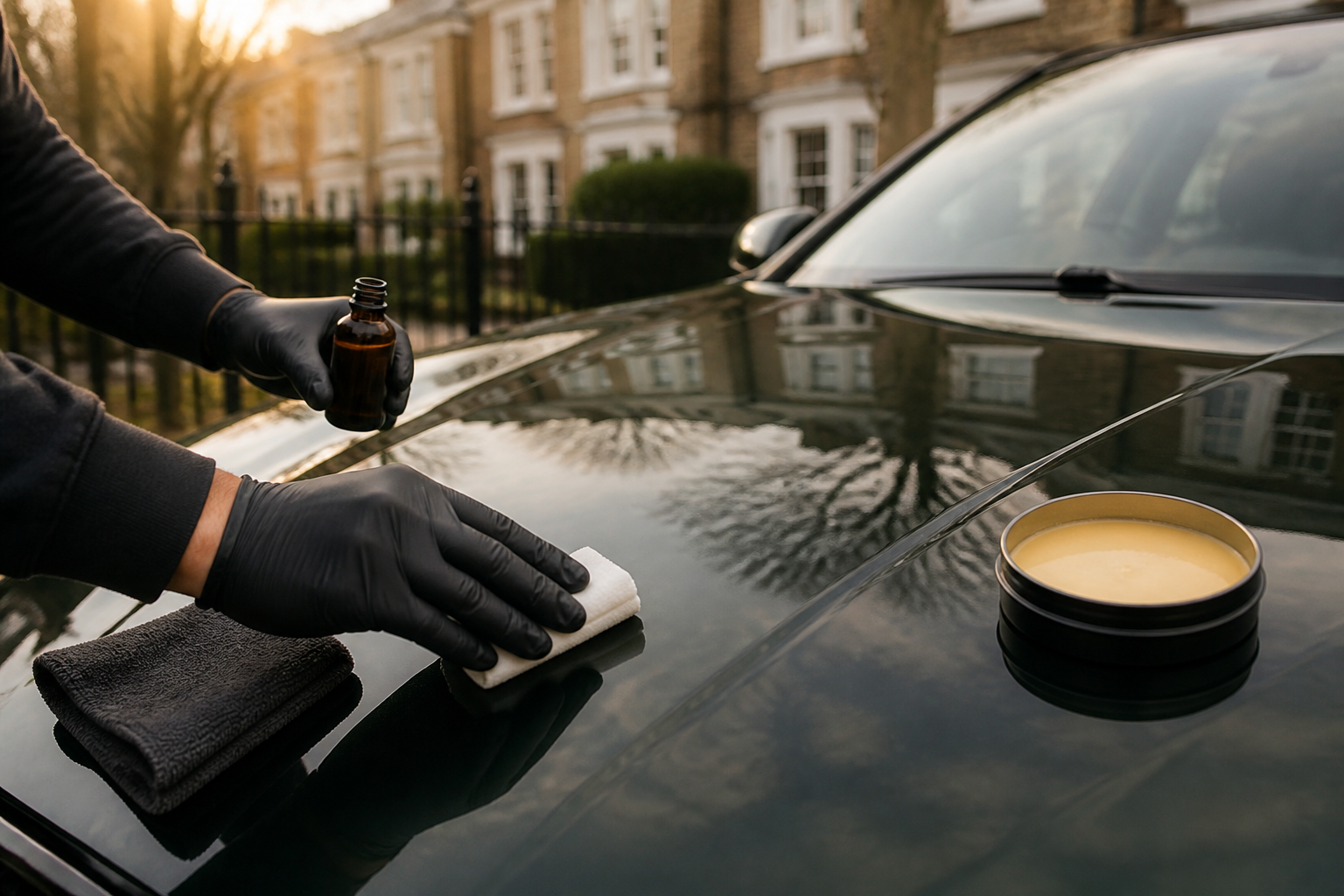
Car wax typically contains natural carnauba wax (from Brazilian palm trees), synthetic polymers, or a blend of both. When applied, wax sits on top of your paintwork as a sacrificial layer.
It fills microscopic imperfections, creates a glossy finish, and provides a barrier against contaminants, UV rays and light water spotting.
Waxes have protected car paint for decades. They're affordable, widely available, and relatively simple to apply by hand or machine.
The trade-off: they don't last long.
Most waxes break down within 4–12 weeks depending on weather exposure, washing frequency and quality.
Ceramic coatings
Ceramic coatings—also called nano-ceramic coatings or glass coatings—are liquid polymers containing silicon dioxide (SiO₂) or silicon carbide (SiC). When applied correctly, they chemically bond with your car's clear coat at a molecular level, forming a semi-permanent protective layer.
The result is a hard, hydrophobic (water-repelling) surface that can last 2–7 years depending on the product grade and maintenance. Ceramic coatings resist UV damage, chemical etching from bird droppings, tree sap, and industrial fallout—common threats in London's urban environment.
Unlike wax, ceramic coatings don't simply sit on top of the paint. They form a covalent bond with the clear coat, which is why proper surface preparation (paint correction, decontamination, panel wipe) is essential before application.
Key differences: durability, protection and cost
Durability and longevity
Traditional wax: 4–12 weeks. High-quality carnauba blends might stretch to three months in ideal conditions, but London's rain, pollution and hard water reduce lifespan.
Expect to reapply every 4–8 weeks if you want consistent protection and gloss.
Ceramic coating: 2–7 years. Consumer-grade DIY coatings (applied at home) last 1–3 years.
Professional-grade coatings installed by trained technicians last 3–7 years.
Longevity depends on maintenance, parking (garaged vs street), and washing methods. In London, where cars face road salt, pollution and frequent washing, ceramic coatings significantly outlast wax.
Protection level
Wax provides:
-
Light UV protection
-
Mild water beading
-
Sacrificial barrier against contaminants
-
Enhanced gloss and depth
-
Minimal scratch resistance (only fills very minor swirls)
Ceramic coating provides:
-
Strong UV protection (prevents oxidation and fading)
-
Extreme hydrophobic properties (water sheets off at 100+ degree contact angles)
-
Chemical resistance (bird droppings, tree sap, road salt, acidic rain)
-
Hard surface (7H–9H pencil hardness depending on product)
-
Easier cleaning (dirt doesn't bond as strongly)
-
Light scratch resistance (resists swirl marks from washing, not key scratches)
Neither product prevents rock chips, deep scratches or collision damage. For that, you need paint protection film (PPF).
Cost comparison
Traditional wax:
-
DIY: £10–£40 per tin (lasts 6–12 applications)
-
Professional application: £50–£100 as part of a detailing service
-
Annual cost (DIY, reapplying every 2 months): £20–£50
Ceramic coating:
-
DIY consumer-grade kit: £40–£150 (one-time application)
-
Professional-grade coating (installed by a detailer): £400–£1,500 depending on vehicle size and coating tier
-
Amortised annual cost (professional coating lasting 5 years): £80–£300 per year
Upfront, ceramic coating costs more. Over time, it's cost-effective if you keep your car for several years and value the superior protection.
Application difficulty: can you DIY?
Applying wax
Wax application is beginner-friendly:
-
Wash and dry the car thoroughly
-
Apply wax in thin, even layers using a foam applicator
-
Allow to haze (5–10 minutes)
-
Buff off with a clean microfibre towel
Mistakes are forgivable. If you apply too much, you can buff it off.
If you miss a spot, reapply.
Most car owners can achieve good results with minimal practice.
Applying ceramic coating
Ceramic coating is unforgiving:
-
Wash, decontaminate (clay bar or iron remover), and dry the car
-
Perform paint correction (machine polishing to remove swirls, scratches, oxidation)
-
Wipe panels with isopropyl alcohol (IPA) or dedicated panel prep to remove oils
-
Apply coating in small sections using applicator blocks
-
Level the coating immediately (20–60 seconds depending on product)
-
Allow to cure (12–48 hours, avoid water)
Mistakes are costly. If you let the coating flash too long before levelling, it becomes difficult to remove.
High spots create uneven gloss.
Dust or fibres trapped during application mar the finish. Poor paint prep means the coating won't bond properly, reducing durability.
DIY ceramic kits have improved, with more forgiving cure times and clearer instructions. However, most detailing professionals recommend leaving ceramic coating to trained applicators unless you have experience with machine polishing and surface prep.
Maintenance requirements
Waxed cars
-
Wash every 1–2 weeks using pH-neutral car shampoo
-
Reapply wax every 4–12 weeks
-
Dry with microfibre towels to prevent water spots
-
Use quick detailer spray between washes to maintain gloss
Maintenance is frequent but straightforward. In London, where hard water and pollution are issues, you'll need to wash regularly to prevent contaminant buildup.
Ceramic coated cars
-
Wash every 1–2 weeks using pH-neutral or ceramic-safe shampoo
-
Use the two-bucket method or pressure washer to avoid marring the coating
-
Dry thoroughly (ceramic coatings bead water, but drying prevents mineral deposits)
-
Apply ceramic booster spray every 3–6 months to refresh hydrophobic properties
-
Avoid automatic car washes with harsh brushes
Ceramic coatings don't eliminate maintenance—they make it easier. Dirt slides off more readily, and you'll spend less time scrubbing.
However, neglecting maintenance degrades the coating's hydrophobic properties over time.
Real-world performance in London conditions
London's climate and urban environment create specific challenges:
Hard water: London's water is among the hardest in the UK (200–300 mg/L calcium carbonate). Water spots form easily on waxed cars.
Ceramic coatings resist mineral deposits better, but you still need to dry the car after washing.
Pollution and fallout: Industrial fallout, brake dust, and road grime bond quickly to waxed surfaces. Ceramic coatings' chemical resistance means contaminants sit on the surface rather than etching into the paint, making removal easier.
Frequent rain: London's 600+ mm annual rainfall tests any protection. Wax degrades faster with constant water exposure.
Ceramic coatings maintain hydrophobic properties for years, keeping your car cleaner between washes.
Street parking: If you park on the street, your car faces more UV exposure, bird droppings, tree sap, and potential vandalism. Ceramic coating's hardness and chemical resistance provide superior protection compared to wax.
Winter road salt: From November to March, London roads are treated with de-icing salt. Salt accelerates corrosion if left on paint.
Ceramic coatings resist salt bonding and make washing it off easier.
Which is right for you?
Choose wax if:
-
You're on a tight budget (under £100 for the first year)
-
You enjoy hands-on car care and don't mind reapplying every few weeks
-
You change cars frequently (less than 2 years ownership)
-
You want a warm, deep gloss (carnauba wax creates a classic 'wet look')
-
You're protecting an older car with imperfect paint
Choose ceramic coating if:
-
You plan to keep your car for 3+ years
-
You want maximum protection in harsh urban conditions
-
You prefer less frequent maintenance
-
Your car is new or has pristine paintwork after correction
-
You're willing to invest £400–£1,500 upfront for long-term benefits
-
You park outside or drive frequently (high exposure to elements)
Consider hybrid options
In 2026, hybrid products blur the lines:
Spray ceramic sealants: These contain SiO₂ but don't form the same strong bond as true ceramic coatings. They last 3–6 months, cost £15–£40, and are easy to apply.
They bridge the gap between wax and coating.
Ceramic wax blends: Some waxes now include ceramic ingredients for extended durability (6–12 months). They offer better protection than pure wax without the application difficulty of ceramic coatings.
Graphene coatings: The latest evolution in ceramic technology, graphene oxide coatings promise even greater durability and hydrophobic properties.
For most London car owners, a professional ceramic coating on a well-maintained car or a quality spray ceramic sealant on an older vehicle strikes the best balance.
Common myths debunked
Myth: Ceramic coating makes your car scratch-proof. Reality: Ceramic coatings resist light swirl marks and marring but won't prevent key scratches, rock chips or deep abrasions. Only paint protection film (PPF) offers that level of protection.
Myth: You never need to wash a ceramic coated car. Reality: Ceramic coatings reduce how often you need to wash and make washing easier, but regular cleaning is still essential to maintain appearance and coating performance.
Myth: Wax is obsolete now that ceramic coatings exist. Reality: Wax remains a cost-effective, accessible option for enthusiasts who enjoy regular detailing or for older cars where ceramic coating isn't economically justified.
Myth: All ceramic coatings are the same. Reality: Consumer-grade DIY coatings differ significantly from professional-grade products in terms of durability, hardness, and chemical resistance. You get what you pay for.
Myth: Ceramic coating eliminates the need for paint correction. Reality: Ceramic coating amplifies whatever surface you apply it to. If your paint has swirls and scratches before coating, they'll be locked in—and more visible.
Paint correction is essential for best results.
The verdict: what's worth it in 2026?
For most car owners keeping their vehicle for 3+ years, professional ceramic coating offers the best value. The upfront cost is substantial, but the long-term protection, reduced maintenance, and preserved resale value justify the investment—especially in London's challenging environment.
If you're on a budget, enjoy hands-on detailing, or change cars frequently, high-quality carnauba wax or a spray ceramic sealant provides excellent protection without breaking the bank.
The worst choice? Doing nothing.
London's pollution, hard water, and road salt will degrade your paintwork quickly without any protection.
Even a basic wax applied every few months is far better than bare paint.
Ultimately, the right choice depends on your circumstances:
-
New car, long-term ownership, street parking: Professional ceramic coating
-
Older car, budget-conscious, enjoy DIY: Quality wax or spray sealant
-
Lease car (2–3 years): Spray ceramic sealant or wax
-
Daily driver, high mileage: Ceramic coating for easier maintenance
-
Weekend/show car: Premium carnauba wax for maximum gloss
Whichever you choose, consistent application and proper washing technique matter more than the product itself. A waxed car maintained correctly will always look better than a ceramic coated car that's neglected.
If you'd rather leave the decision—and the application—to professionals who understand London's unique challenges, Valetly's mobile detailing team can assess your car's condition and recommend the protection that makes sense for your situation.
Frequently asked questions
How long does ceramic coating actually last?
Professional-grade ceramic coatings last 3–7 years with proper maintenance. Consumer DIY kits last 1–3 years.
Durability depends on product quality, application technique, maintenance routine, and environmental exposure.
In London's urban environment with frequent washing, expect the lower end of these ranges. Coatings don't fail suddenly—hydrophobic properties gradually diminish over time.
Can I apply ceramic coating over wax?
No. Ceramic coatings must bond directly to the clear coat.
Wax, oils, or contaminants on the surface prevent proper bonding, causing premature failure.
You must strip all wax using a panel prep solution (isopropyl alcohol or dedicated degreaser) before applying ceramic coating. This is a critical step that many DIY applicants skip, leading to disappointing results.
Is ceramic coating worth it for an old car?
It depends on the car's condition and your plans. If the paint is heavily oxidised, scratched, or faded, you'll need extensive paint correction first—potentially costing £300–£800 before coating.
For older cars you're keeping for sentimental reasons, ceramic coating makes sense.
For older cars with marginal resale value, a quality wax or spray sealant is more economical.
Does wax provide any protection ceramic coating doesn't?
Carnauba wax creates a warmer, deeper 'wet look' gloss that some enthusiasts prefer over ceramic coating's glass-like finish. Wax is also easier to apply and remove, making it ideal for show cars where you frequently change products.
However, ceramic coating provides objectively superior protection against UV rays, chemicals, and environmental contaminants.
Can I use automatic car washes with ceramic coating?
Touchless automatic washes are generally safe for ceramic coatings. Avoid brush-based automatic washes, as the brushes can mar the coating over time and reduce its lifespan.
Hand washing using the two-bucket method or a pressure washer with a foam lance is ideal.
In London, many petrol station washes use harsh brushes—these are best avoided regardless of your paint protection.
<!
Useful next steps
-
New to the terminology? See the Valetly car wash glossary.
-
Ready to book? Our at-home car detailing in London includes a ceramic-spray sealant add-on.
Want it applied for you? See ceramic coating in London for what a mobile application involves and what it costs.