
How to Check Tyre Pressure for Your Car in London?
To accurately check tyre pressure, locate your car's recommended pressure settings, usually found on a sticker inside the driver's door jamb, fuel filler flap, or in the owner's manual. Use a reliable tyre pressure gauge on cold tyres, pressing it firmly onto the valve stem until the reading stabilises.
Compare this reading to the manufacturer's specification and adjust as necessary.
Key facts
Why is it important to check tyre pressure regularly in London?
Checking tyre pressure regularly is crucial for your vehicle's safety, fuel efficiency, and tyre longevity. Correct tyre pressure ensures optimal contact between your tyres and the road surface, which is vital for braking, steering, and overall vehicle stability.
Over-inflated or under-inflated tyres can lead to uneven wear patterns, requiring more frequent and costly replacements.
Driving in London, with its varied road surfaces, frequent stops, and diverse driving conditions, places particular demands on tyres. Correct pressure helps absorb road imperfections better and reduces the risk of blowouts, especially at higher speeds on motorways like the M25.
It also directly impacts your car's fuel economy, an important consideration given the fluctuating fuel prices in the capital. Regularly checking your tyres is a simple, cost-effective maintenance step that pays dividends in safety and savings.
- Tip: Always check tyre pressure when tyres are 'cold' – meaning the vehicle has been stationary for at least three hours or has only travelled a short distance (under two miles) at low speed. Driving generates heat, which increases the pressure inside the tyre, giving a false reading.
Where can you check tyre pressure in London and what does it cost?
You can check tyre pressure easily at home with a portable gauge or at most petrol stations across London and the M25 commuter belt. Buying your own gauge, either analogue or digital, is a one-off cost, typically ranging from £10 to £30.
This allows for convenience and ensures tyres are cold when checked, providing the most accurate readings. Many drivers find this a worthwhile investment for consistent maintenance.
Alternatively, nearly all petrol stations offer air compressors, which usually incorporate a pressure gauge. These typically operate on a pay-per-use system, costing £1 or £2 for a set duration, often around 5-7 minutes.
This time is usually sufficient to check and adjust the pressure for all four tyres, plus a spare if applicable. Ensure the nozzle fits securely onto your valve stem to avoid air leakage while adjusting.
| Method | Initial Cost | Per-Use Cost | Convenience |
|---|---|---|---|
| Personal Pressure Gauge | £10 - £30 (one-off) | Free | High (at home) |
| Petrol Station Air Pump | Free (no purchase needed) | £1 - £2 (for ~5 mins) | Moderate (requires trip) |
How do you find the correct tyre pressure for your car?
Finding the correct tyre pressure for your specific vehicle is straightforward and essential for accurate maintenance. Every car manufacturer provides recommended tyre pressure settings tailored to that model's weight, performance characteristics, and safety requirements.
These specifications are typically listed in a prominent and accessible location on your vehicle.
The most common places to find this information are: on a sticker inside the driver's side door jamb, printed on the inside of your fuel filler flap, or detailed within your vehicle's owner's manual.
The sticker or manual will often show different pressures for front and rear tyres, and sometimes separate recommendations for light and fully loaded conditions. Always refer to these official sources to ensure you're using the correct psi (pounds per square inch) or bar measurements for your car.
These values are specific to the original equipment tyres fitted to your car; if you have changed tyre sizes or types, consult a specialist.
- Warning: Never rely on the maximum pressure stamped on the tyre sidewall. This is the maximum pressure the tyre can safely hold, not the recommended operating pressure for your specific vehicle.
What happens if you get tyre pressure wrong or ignore it?
Ignoring correct tyre pressure or getting it wrong has several negative consequences, impacting both your vehicle's performance and your safety. Under-inflated tyres cause excessive flexing of the tyre walls, leading to increased rolling resistance and higher fuel consumption.
This also generates more heat within the tyre, which can accelerate wear and significantly increase the risk of a blowout, especially at speed on London's orbital routes like the M25.
Conversely, over-inflated tyres reduce the contact patch between the tyre and the road, meaning less grip for braking and cornering. This can make your car feel less stable and reduce its handling responsiveness.
Over-inflation also leads to uneven wear, concentrating on the centre of the tread, thereby shortening the tyre's lifespan. Both scenarios compromise road safety and can lead to early tyre replacement, costing you more money in the long run.
Regular checks help avoid these issues.
- Key figure: Studies show that tyres under-inflated by just 6 psi can reduce fuel efficiency by up to 3% and decrease tyre life by 10,000 miles.

How does checking tyre pressure relate to getting your car cleaned?
While Valetly does not handle MOTs, servicing, or vehicle tax, maintaining your car's appearance complements its mechanical upkeep. When you regularly check tyre pressure, clean wheels make the process much easier.
A clean wheel allows for clear visibility of tyre sidewall markings, including pressure recommendations and valve stem access. It also makes it simpler to spot any damage or wear that might affect tyre integrity.
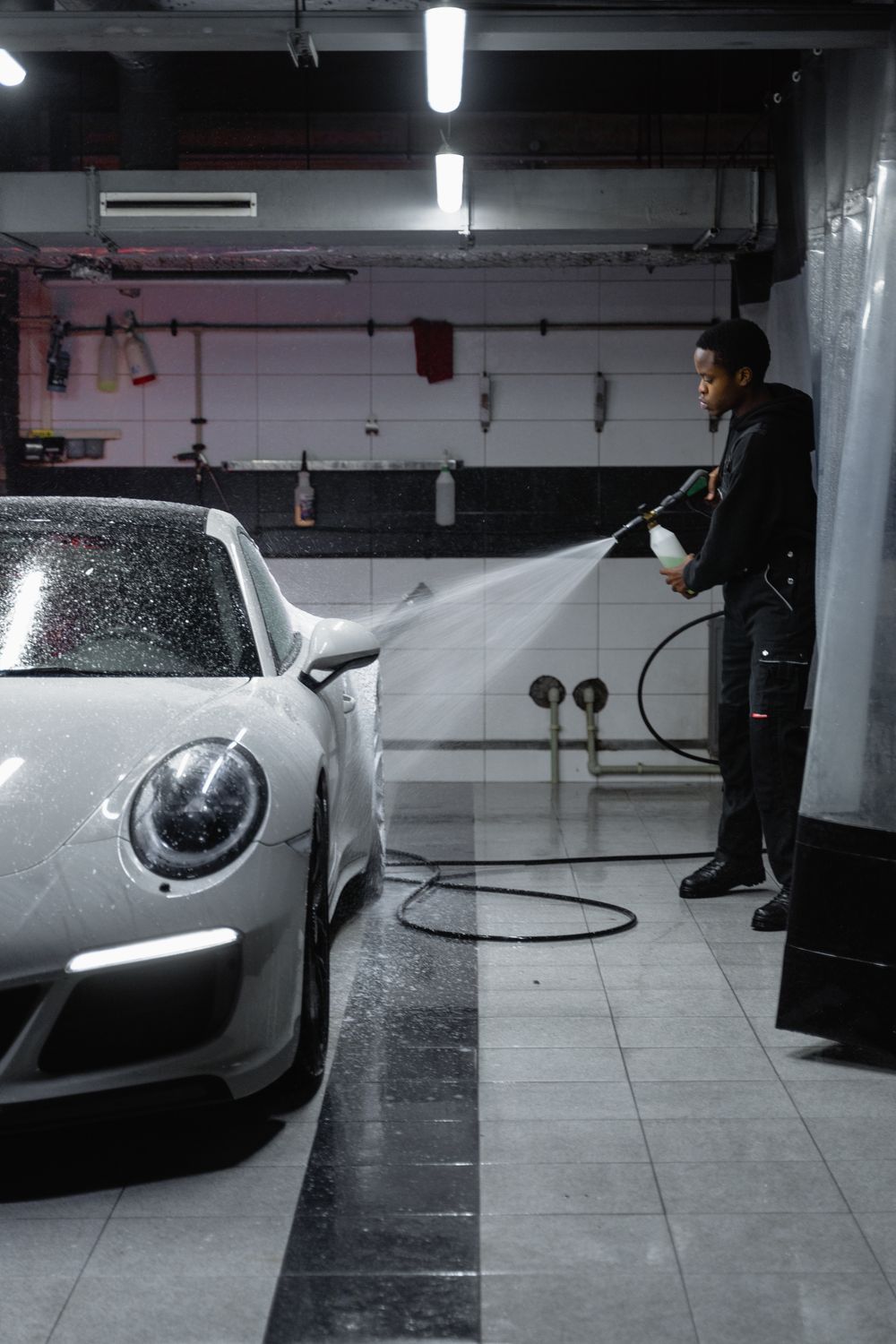
Our valets pay close attention to wheels and tyres as part of every wash. A thorough wheel clean, which is included in all our mobile car wash services, removes brake dust, road grime, and other contaminants that can obscure valve stems and tyre details.
This meticulous cleaning ensures that when you need to check, the valve caps are easily accessible and readings are quick and straightforward to take. Ready to make your wheels pristine for your next pressure check?
book a mobile car wash in London today.
Next, read Car reg check: how to do it properly for the detail behind that decision. Next, read car reg check: how to do it fast for the detail behind that decision.
Frequently asked questions
How often should I check my tyre pressure?
You should check your car's tyre pressure at least once a month. It is also important to perform a check before any long journey, especially if you are carrying a heavy load.
Temperature changes can affect tyre pressure, so more frequent checks might be beneficial during seasonal shifts.
Can extreme weather affect tyre pressure?
Yes, extreme weather conditions, particularly significant drops in temperature, can affect tyre pressure. For every 10-degree Celsius drop in ambient temperature, tyre pressure can decrease by approximately 1 PSI.
This makes regular checks even more important during colder London winters.
Is it better to have slightly over-inflated or under-inflated tyres?
Neither is ideal. Both over-inflation and under-inflation negatively affect safety, tyre wear, and fuel economy.
It is always best to maintain the exact recommended pressure for your vehicle. Deviating from the manufacturer's specification can lead to compromised handling and increased risks on the road.
What type of tyre pressure gauge is best?
Both analogue stick gauges and digital gauges are reliable. Digital gauges typically offer greater precision and an easier-to-read display.
Whichever type you choose, ensure it is calibrated and from a reputable manufacturer to guarantee accuracy for your tyre pressure check.
Many drivers prefer digital for their ease of use.
Valetly is a London mobile valeting marketplace (company number 17255496) connecting vetted, insured independent valets with drivers across all 32 London boroughs, with fixed prices from £75.