What Are Car Detailing Bags and When Is Detailing Worth Paying For?
Car detailing bags are portable kits containing specialist tools and products for deep condition work on paintwork, glass, trim and interior surfaces.
If you are searching this term, you likely want to understand what detailing involves and whether paying a London professional makes sense for your car.
Detailing goes far beyond a wash: it is multi-stage work addressing swirl marks, oxidation, stubborn stains and protective coating, typically taking three to six hours.
Key facts
What does detailing involve and how does it differ from valeting?
Detailing is condition work, not cleaning. Valeting removes dirt and restores tidiness; detailing removes defects and restores gloss.
A detail addresses swirl marks left by years of washing, oxidation dulling the clear coat, staining in fabric or leather, and contamination embedded below the surface.
The work happens in stages: paintwork is cleaned, then decontaminated with a clay bar, then polished by machine to remove a microscopic layer of clear coat, then sealed. Interiors are vacuumed, then deep-cleaned with brushes and extraction tools, then conditioned.
The difference shows in time and price. A mobile valet completes an exterior and interior clean in 90 minutes for £75–£130.
A detailer spends three to six hours on the same car, charging £200–£600. The valet leaves your car clean; the detailer leaves it corrected.
Both have a place, but they answer different questions.
If you want grime removed and the car presentable, book a valet. If you want scratches reduced, fading reversed or stains lifted that survive normal cleaning, you need detailing.
Tip: Book a detail before listing a car for sale. Buyers notice gloss and will pay more for a car that looks maintained rather than merely washed.
Vans and larger vehicles take longer and cost proportionally more. A full detail on a Mercedes Sprinter can reach £800 because of the surface area and number of seats.
What do car detailing bags contain and do you need one?
Car detailing bags hold the products and applicators a detailer uses at a job. A basic enthusiast bag contains 15–20 items: applicator pads, brushes, a clay bar, polish, wax or sealant, glass cleaner, trim dressing, and separate cleaners for leather, fabric and plastic.
Professional bags contain 50+ items because each surface and defect type requires a different product and tool. One foam pad applies compound; another applies finishing polish.
One brush cleans air vents; another reaches seat rails.
You do not need a detailing bag unless you plan to detail your own car regularly and have the time, space and equipment to do so. A clay bar requires a lubricant and technique.
Machine polishing requires a dual-action polisher, multiple pads, and practice on scrap panels to avoid burning through the clear coat.
Extraction cleaning requires a wet vacuum. Most London drivers lack a garage, outside tap, and the four to six hours the work demands.
Buying a bag and tools costs £150–£400, plus the polisher at £100–£250, which buys one professional detail.
Warning: Machine polishing without training removes too much clear coat or creates holograms. A professional correction to fix amateur polishing costs more than hiring a detailer in the first place.
If you enjoy the work and have suitable space, a bag makes sense for maintenance between professional details. If you want the result without the labour, pay someone who does it daily.
How much does car detailing cost in London and what affects the price?
Professional detailing in London follows a tiered structure based on the work involved. A basic interior detail (vacuum, wipe-down, glass clean, light conditioning) costs £80–£150 for a hatchback.
A full interior detail with extraction cleaning and stain treatment costs £150–£250.
A single-stage exterior detail (wash, clay, single-stage polish, wax) costs £180–£300. A full correction detail (multi-stage polishing to remove deep swirls and scratches) costs £350–£600, rising to £800–£1,200 for premium or large vehicles.
Price depends on size, condition and location. A heavily soiled interior takes longer than a lightly used one.
Detailers working from a unit charge less than mobile detailers who bring water, power and shelter. Expect to add 15–25 per cent for mobile work.
Paint correction on a dark-coloured car takes longer because defects show more clearly and require finer finishing stages. Leather interiors cost more than fabric because conditioning and protection are separate steps.
Book detailing at your address to compare vetted professionals across the areas we cover. Fixed pricing removes the guesswork.
| Service | Duration | Typical London price |
|---|---|---|
| Interior detail (basic) | 1.5–2 hours | £80–£150 |
| Full interior detail | 2.5–4 hours | £150–£250 |
| Single-stage exterior detail | 3–4 hours | £180–£300 |
| Full correction detail | 5–8 hours | £350–£600 |
| Maintenance detail (interior + exterior wash and wax) | 2–3 hours | £120–£200 |
Key figure: A well-executed detail before selling typically adds £500–£1,200 to a car's resale value, easily covering the cost.
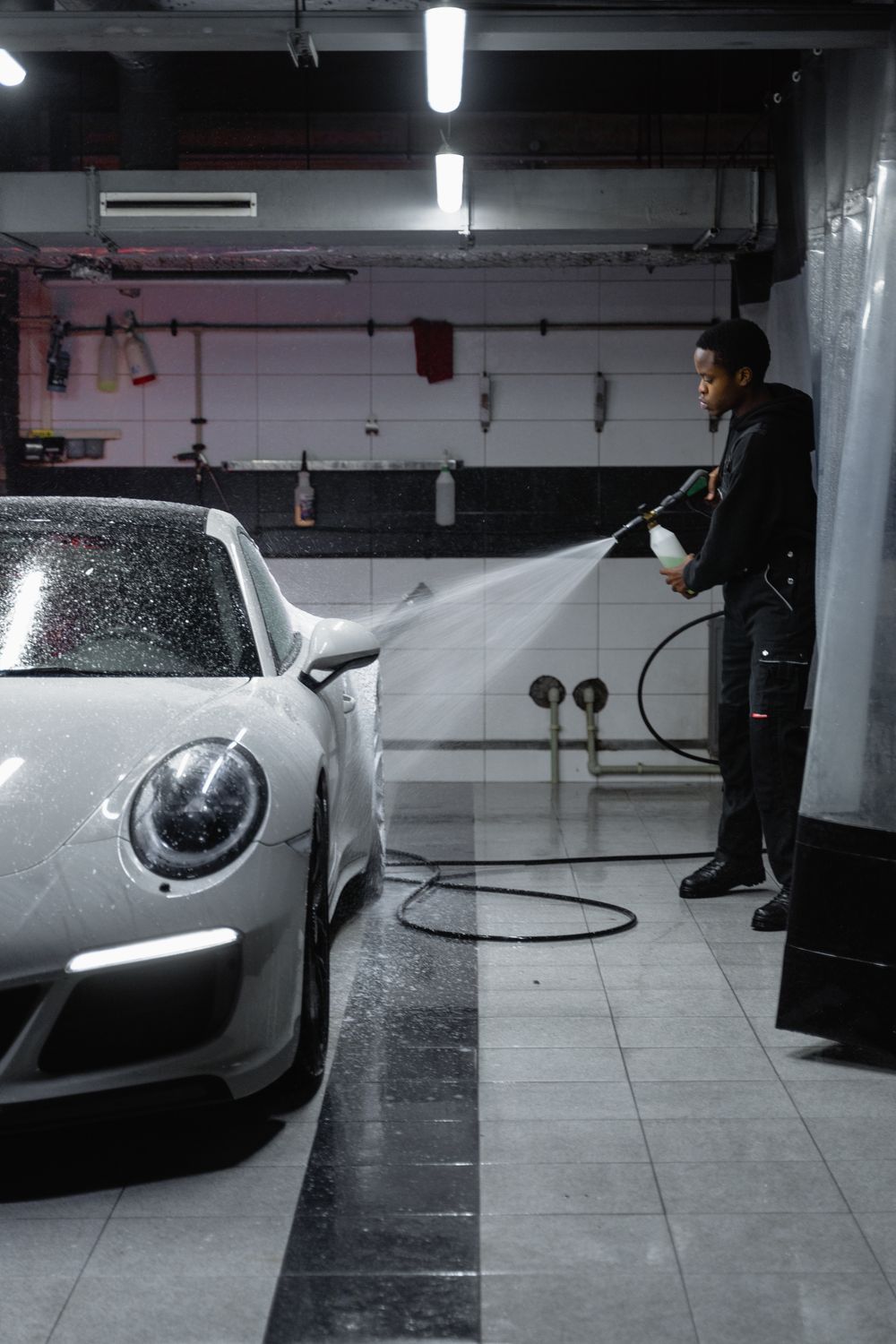
When is paying for detailing worth it and when should you skip it?
Detailing is worth paying for in four situations: before selling, after winter, once a year for high-value cars, and when a defect bothers you daily. Before selling, a detail makes a car photograph well and signals care to buyers, directly increasing offers.
After winter, road salt and grit embed in paintwork and carpets; detailing removes contamination that shortens the life of the finish. For cars over £25,000, an annual detail maintains gloss and prevents compounding of minor damage.
If a stain, swirl pattern or dull trim bothers you every time you open the door, the detail pays for itself in satisfaction.
Skip detailing if the car is under three years old with no visible defects, if you are not selling within the next year, or if the car's value is under £5,000 and you plan to run it into the ground. A £400 detail on a £3,000 car makes no economic sense unless you personally value the result.
Similarly, detailing a lease car in the final month adds cost with no return unless the lease company charges for condition beyond fair wear. An annual valet at £75–£130 keeps a daily car tidy without the expense of correction work.
London factors matter. If you park on-street under trees, sap and bird lime etch the paint within days of a detail.
Frequent maintenance washes preserve the work better than one annual correction. If you park in a secure underground space and drive 4,000 miles a year, a detail every 18 months suffices.
Tip: Schedule detailing for early April after the last salting or late September before winter. You will see the benefit for the maximum time before the next harsh season.
Can you detail a car yourself in London and what are the limits?
You can detail your own car if you have off-street parking, an outside tap or access to a hose, and five to eight hours on a dry day. Most London homes lack these.
Terraced streets, permit-only bays and shared drives make bringing water and power difficult.
Washing on the pavement risks a fine under local byelaws in several boroughs. Flats with basement parking usually prohibit washing because of drainage rules.
Even where space exists, machine polishing requires practice. Most owners produce better results by cleaning and protecting the car by hand, then paying a professional for correction every two years.
The limits are time, skill and equipment. Hand-polishing with a paste can improve gloss but will not remove swirls.
Extraction cleaning with a hired machine works, but hire costs £30–£50 per day and the learning curve is steep. You will spend four hours on the first attempt and may oversaturate seats.
Clay-bar work is learnable but labour-intensive: a full car takes 90 minutes. Detailing your own car makes sense if you enjoy the process and can dedicate a weekend twice a year.
If you want the result and nothing else, hire someone.
Refer to auto detailing interior: London prices and what to expect for a breakdown of professional interior work.
For transparent pricing on any service, see fixed-price car wash London: what 'all included' means.
Frequently asked questions
**
Exterior protection lasts three to six months depending on the product and conditions. Sealants last longer than natural wax.
Parking on-street and driving daily shortens durability; garaged cars hold gloss longer. Interior cleaning lasts until the next spill or muddy school run.
Maintenance washes every two weeks preserve a detail's appearance far longer than washing monthly.
**
Yes, mobile detailers work across London, though some avoid congestion and ULEZ zones because of the added cost. Valetly connects customers with vetted, insured valets in all 32 boroughs.
Mobile work costs more than unit-based detailing because the professional brings water, power and sometimes a shelter.
Expect £20–£50 extra for mobile service.
**
A single-stage detail uses one grade of polish to improve gloss and remove light swirls in a single pass. A multi-stage detail uses cutting compound to remove deeper scratches, then refining polish to remove haze left by the compound, then finishing polish for maximum gloss.
Multi-stage correction takes twice as long and costs £150–£250 more but delivers a mirror finish on dark paint.
**
Detail before listing. Buyers judge condition in the first 30 seconds and gloss signals care.
A detailed car photographs better, attracts more viewers and typically sells for £500–£1,200 more than an identical car with swirls and stains.
Detail two weeks before listing to allow time for any correction if something is missed, and avoid detailing the day before viewing because fresh dressing can feel greasy.
**
Detailing removes or reduces scratches in the clear coat but cannot remove scratches that reach the base coat or primer. If you feel a scratch with your fingernail and it catches, polishing will reduce its visibility but not eliminate it.
Deep scratches require paint touch-up or a respray.
A professional detailer will tell you honestly whether correction is possible before starting work.

Conclusion
Car detailing bags contain the tools for multi-hour condition work that valeting does not cover. For most London drivers, paying a professional delivers better results than attempting correction at home.
Detail before selling, after winter or once a year for high-value cars, and skip it otherwise.
Compare vetted, insured professionals with fixed pricing at Valetly — no hidden costs, before/after photos on every job, and service at your address across London.
Valetly is a London mobile valeting marketplace (company number 17255496) connecting vetted, insured independent valets with drivers across all 32 London boroughs, with fixed prices from £75.